This post is adapted from the opening chapter of a book I'm currently writing. More to come!
Let’s start with a simple question: what is faith? Before you read on, answer it in your own head.
Is it believing in something with no physical evidence, like fairies and unicorns? Is it Bon Jovi, livin’ on a prayer, hoping tomorrow is better than today? Walt Disney taught a generation to wish upon a star, and my kids loved The Polar Express, where believing in Santa was the whole point.
Notice what the world assumes: faith is something you have to summon on your own. Believing is your job, and if you don’t do it well, the good things you hoped for might not come. Success and failure alike rest on your effort. That is a performance-based, merit-driven system, and anyone living in it is in a bind. When faith is low, expectations tank and woe becomes the theme. When faith is high, we chest-thump because no mountain is too tall.
Homegrown Faith
Now narrow it down to religion. Why do you believe what you believe? Because your family does? Because your community does? Because you went to college and started doubting everything you were taught? Christians, I’m asking you too. Do you believe the Bible because influential people told you it’s God’s Word?
I’m playing devil’s advocate, but with purpose. For most people, faith starts and ends with a decision. We gather information from family, friends, culture, and school, then run it through our values and ambitions. Whatever serves our goals stays; everything else gets tossed. What’s left is your faith: one-hundred percent homegrown, homemade, and of your own choosing, picked off the buffet of belief that culture sets out. I’ll dare say even Christians do this. We pick and choose what we’ll believe about the Lord with the same prejudice toward our own ambitions.
So is that faith supernatural? Hardly. Whatever comes from brokenness cannot fix brokenness. It’s like asking Dr. Jekyll to heal Mr. Hyde: same person, same mind. If your mind is the problem, you can’t rely on it to cure itself. Homemade faith only produces hopes that mirror the desires already inside you. It isn’t supernatural. It’s decidedly human.
A King Who Hid in the Luggage
King Saul is a tragic figure. He never sought power. On the day he was to be proclaimed king, he hid among the luggage. The Lord chose him because he would mirror the faith of Israel, and that faith was tested when Samuel instructed Saul to wait for him to offer the sacrifice before going into battle.
He waited seven days, the time appointed by Samuel. But Samuel did not come to Gilgal, and the people were scattering from him. So Saul said, “Bring the burnt offering here to me, and the peace offerings.” And he offered the burnt offering. — 1 Samuel 13:8
Samuel was late, and the soldiers were deserting. So Saul made a pragmatic decision: I’ll do it myself. He took the information he had, weighed his ambitions, and believed the best course was to make the sacrifice on his own. That wasn’t disbelief. He believed in the Lord, or why bother with a sacrifice at all? But instead of aligning his goals with the Lord’s command, he served the Lord in a way that supported his own.
There’s nothing supernatural about pragmatic faith. It never forces us to deny the flesh; it finds ways to have our cake and eat it too. It is born of the broken desires of the human heart, yes, even a desire to avoid hell.
I grew up in a Christianity that was very good at depicting the flames of hell, and for the record, we should be. What it didn’t do well was show the eternal riches and pleasures at the Lord’s right hand. We convinced many to avoid hell by believing in Jesus, but we convinced few that Jesus is the greatest treasure. The Lord used my fear of hell as a starting point, and He does for many. While a gospel with no hell isn’t the Gospel, a faith that only seeks to avoid hell isn’t supernatural. Even demons want to avoid hell. When Jesus cast out Legion, they begged to be sent into pigs rather than the abyss.
Believing Jesus is the greatest treasure takes supernatural faith, because nothing your senses gather supports the claim.
Now faith is the assurance of things hoped for, the conviction of things not seen. — Hebrews 11:1
Batteries Not Included
Remember getting a toy as a kid that needed batteries, but nobody included any? It needed a power source that wasn’t in the box.
You and I aren’t plastic toys, but there’s a parallel. Paul told the Ephesians that before Christ, they were dead in their trespasses and sins. Not physically dead. Spiritually dead. “But what about all the spirituality in the world?” Great question, and my answer is a little grotesque. When I was nine, a friend and I got our hands on an unused electric fence generator, and what do two nine-year-old boys do with that? We shock things. We found a dead frog, remembered Frankenstein, and hooked it up. Its legs jerked and kicked as if it were alive.
Connected to a power source, dead things can look alive. That’s what the spiritual experiences of the spiritually dead are. The unseen realm is real, and plugging a dead spirit into it looks like life. But pull the plug and it’s lifeless again. The only way that frog was coming back was a complete transformation from the inside, and that would take something supernatural.
So if your spirit only shows signs of life when you plug in, to that space, that ritual, that religion, it looks more like reanimation than resurrection. (I think I just accidentally described the spiritual experience of many professing Christians. Awkward.) That is not the life Jesus promised.
The thief comes only to steal and kill and destroy. I came that they may have life and have it abundantly.— John 10:10
You can’t create that life by plugging into your favorite outlet. It overflows, and it never needs reconnecting, because He is the power source, and He never runs out.
Born of the Wind
So what changes a dead spirit? Jesus told Nicodemus, “You must be born again,” and then added this:
The wind blows where it wishes, and you hear its sound, but you do not know where it comes from or where it goes. So it is with everyone who is born of the Spirit. — John 3:8
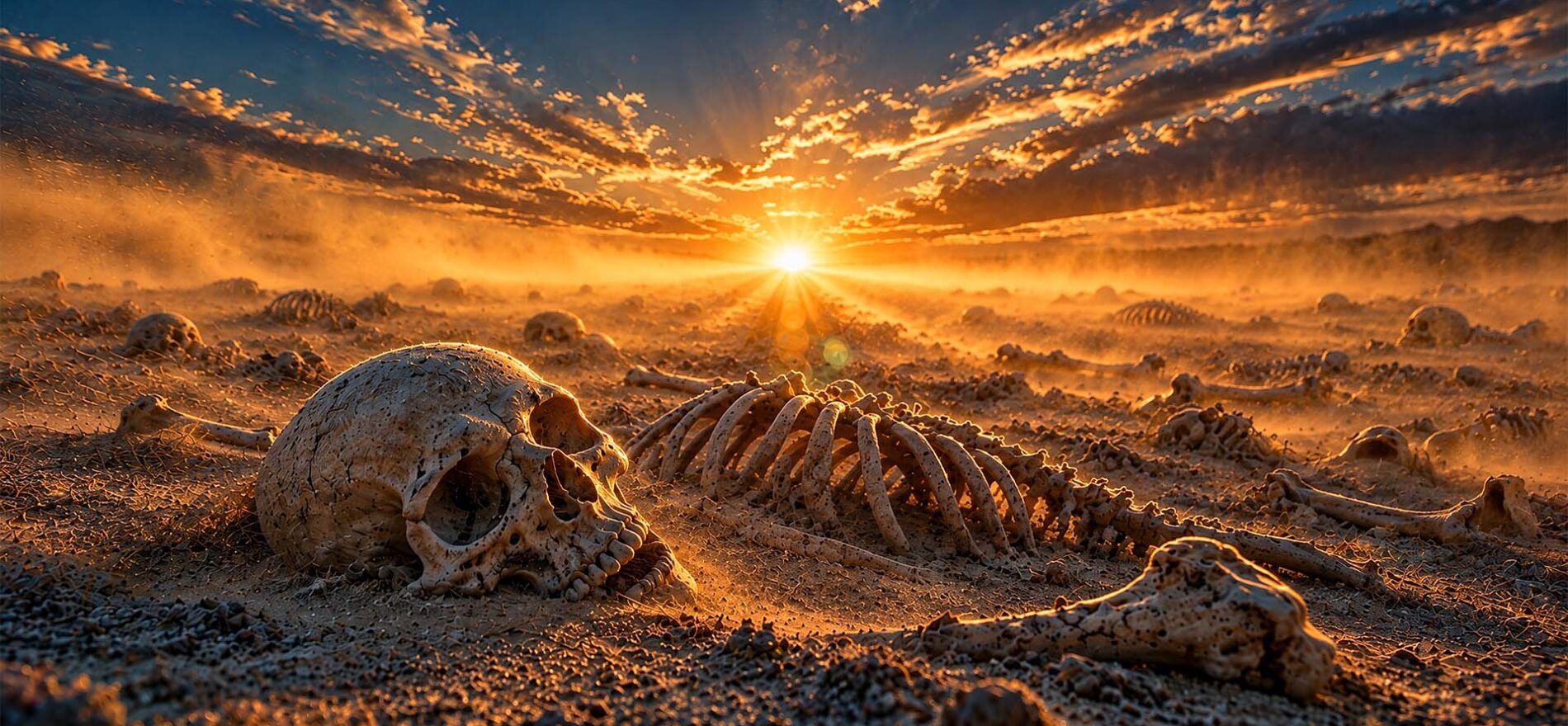
Nicodemus should have recognized the language from Ezekiel, where the Lord promised a new heart and a new spirit, and then breathed life into a valley of dry bones. In Hebrew, the word for wind, breath, and spirit is the same: ruach. Jesus simply made the leap from ruach (wind) to ruach Elohim (the Spirit of God). The Holy Spirit blows where He wishes and brings life where He wishes. That’s why Paul wrote that no one can say “Jesus is Lord” except in the Holy Spirit (1 Corinthians 12:3).
You can believe all the facts about Jesus. You can agree with everything I’ve said here. But unless the ruach Elohim has blown new life into you, you remain dead in your sins. Dead people can’t decide to come to life. The new birth is the Lord’s work from beginning to end, and all you have is your response to His work: resist Him with a hardened heart, or run to Him in faith and repentance.
That is what makes this faith supernatural. It didn’t arise from what you could figure out. It came from what He revealed. And once your spirit is resurrected, you have ongoing fellowship with the Father, through Christ, by the Spirit who lives in you. You don’t even need a plug. Jesus said streams of living water will flow from the one who believes in Him. You overflow.
Faith That Multiplies
Saving faith is only the beginning. Supernatural faith gives rise to more supernatural faith. A fear of hell may be square one, but a desire to avoid hell with no desire to worship Jesus as Lord is a warning sign that your faith springs from the natural desire to avoid suffering.
The kingdom of heaven is like leaven that a woman took and hid in three measures of flour, till it was all leavened. — Matthew 13:33
The leaven works through all the flour. In the same way, the Holy Spirit’s supernatural work spreads through a believer’s whole life, transforming us “from one degree of glory to another” (2 Corinthians 3:18).
Now bring that down to the trenches, because all of this unfolds in the middle of a battle. The abundant life happens despite the raging war, not apart from it, and the fight is precisely where supernatural faith multiplies. Nearly every miracle in Scripture is tied to suffering, brokenness, war, or struggle. The Lord delivers and heals where there is dire need.
I’ve grown most in hard seasons, especially the ones I didn’t cause. A few years ago, a heartbreaking situation with one of my children had me preparing to leave ministry. One day in prayer, the Lord told me to wait, because He was going to save my child. Nearly four months later, He did. In between, I held on to that word by faith, and through it all, He increased my faith. It held me steady, and it birthed more.
I haven’t arrived. I’m walking through another storm right now, and this time I don’t have as clear a word to hold on to. No training wheels. Some days I question everything. But I know what He called me to do, and I’ll keep going until those marching orders change, even on days when continuing makes no earthly sense. And lest anyone think the multiplying comes from my effort, it doesn’t. The growth you need doesn’t happen because of you. It happens because of Him.
For by grace you have been saved through faith. And this is not your own doing; it is the gift of God, not a result of works, so that no one may boast. — Ephesians 2:8-9
If we could accomplish any part of our salvation on our own, Christ’s death was unnecessary.
Examine Yourself
Peter urged us to confirm our calling and election, and I take that as a serious call to self-examination. Some preachers say never let anyone cause you to doubt your salvation. I disagree, and I think Peter does too. You can’t say a prayer, get baptized, and rest on your laurels. That is insurance against hell, not a submitted life, and it’s the same desire to avoid hell that the demons have.
So ask yourself: is my faith the product of pragmatic choices shaped by family, friends, and community? Am I going to church to reconnect with an experience while the rest of the week feels dead? Or can I honestly say, despite stumbles and rumbles, that I have supernatural faith, evidenced by a fruitful, ongoing relationship with the Holy Spirit who dwells in me?
Evaluate yourself. Then ask the friend who will tell you the truth even when it hurts, and invite their brutal honesty. Most of all, keep asking the Lord to reveal the truth. He delights in it and is always happy to share. With those three, I believe you’ll find your answer.
Is your faith supernatural? In a world increasingly aware of the unseen realm, it’s crucial to know. I pray the Lord shows you quickly, as He has for me.