
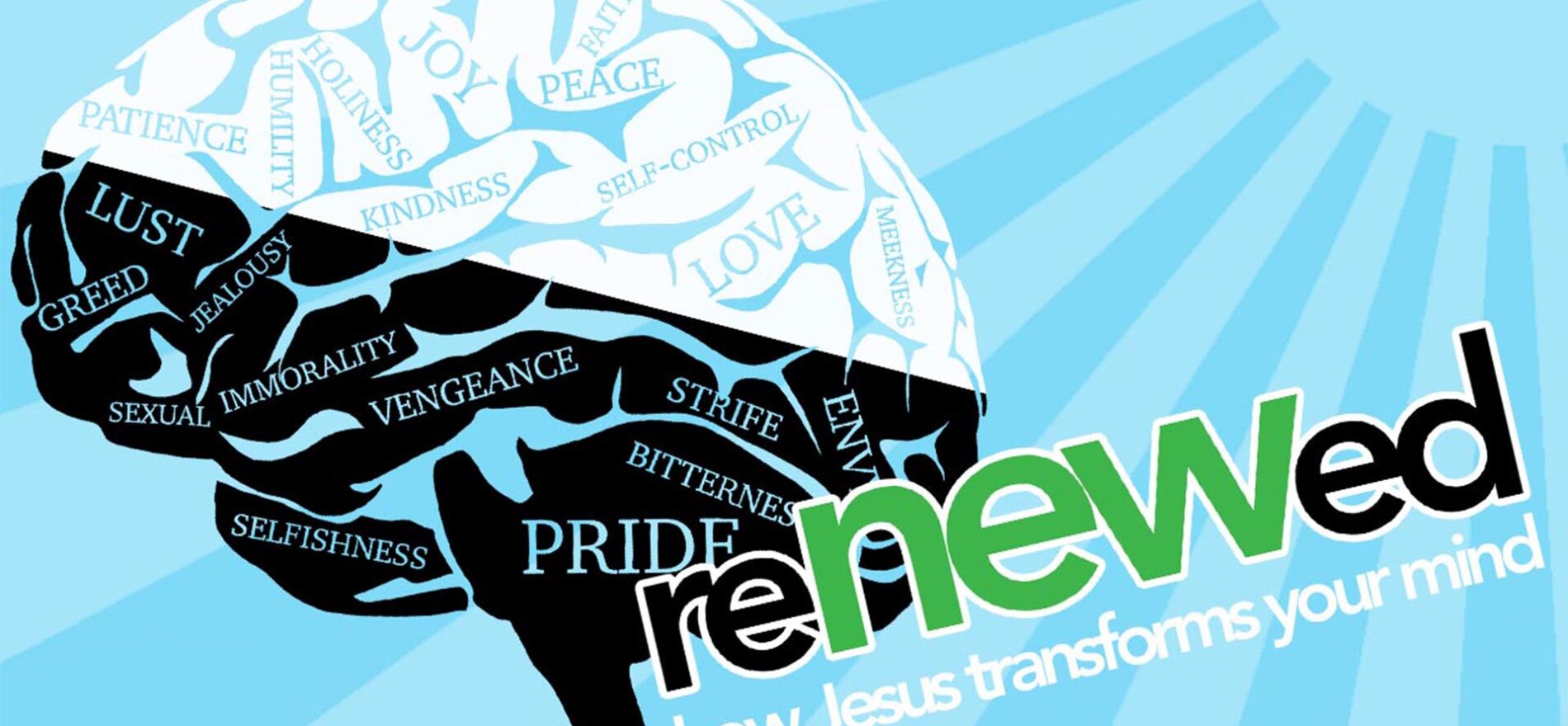
n 2017, I wrote a book called Renewed: How Jesus Transforms Your Mind. This is part of a series of articles based on that book’s content. Hope you find them helpful.
Where everything we’ve been after finally lands.
Your mindset sets the course of your life, because few people ever deviate beyond its boundaries. I think of small towns I’ve known — the once-white steeples dirty, storefronts shuttered, the yards gone native. There are real economic forces at work, but often the deeper cause is mindset. A people unbothered by decline are already in a death-spiral. The same is true of us: “To set the mind on the flesh is death, but to set the mind on the Spirit is life and peace” (Romans 8:6).
But notice the goal is bigger than just avoiding death. If dodging sin were the whole point, God would have taken us home the moment we were saved. Instead he leaves us here because he wants to change our understanding — to let us know, not merely as a fact but by experience, that his way is best. He wants to change our mindset about everything. Paul puts it stunningly: “The natural person does not accept the things of the Spirit… But we have the mind of Christ” (1 Corinthians 2:14-16). In my mind, I’ve turned that last line over and over for years. It means more than having the Spirit reside in us; it means a profound change in how we engage sickness, family trouble, money, injustice. The mind of Christ is the goal of all our transformation on this earth.
And where do we see that mind most clearly? In his teaching — above all, the Sermon on the Mount. Again and again Jesus says, “You have heard that it was said… but I say to you,” raising a standard and announcing, this is what citizens of my Father’s kingdom look like. Not get-it-right-occasionally obedience, but a daily, normal way of life. Read Matthew 5–7 slowly and you’ll feel how impossible it is for the natural man. Here are a few of the gut-checks.
Anger
“Everyone who is angry with his brother will be liable to judgment” (Matthew 5:21-22). Jesus moves the line back from murder to anger itself, and lumps slander right in with it. Is all anger sin? No — anger is the proper response to injustice, and God himself gets angry. “Be angry and do not sin; do not let the sun go down on your anger” (Ephesians 4:26-27). We cross into sin when we would rather nurse our anger than forgive.
Lust
“Everyone who looks… with lustful intent has already committed adultery with her in his heart” (Matthew 5:27-28). We tend to pin lust on men, but men and women are both guilty — some just need a picture, some build a narrative; it’s lust either way. The culture says what stays in your head is harmless. Jesus says otherwise. Having the mind of Christ means giving the Spirit control of which thoughts get screen time.
Revenge
“Do not resist the one who is evil. But if anyone slaps you on the right cheek, turn to him the other also” (Matthew 5:38-39). That doesn’t mean roll over and die. Meekness is an overlooked but powerful quality: it’s having the ability to retaliate and choosing peace instead. It takes more strength to turn the cheek than to return the blow. Kingdom people work toward reconciliation, not further division.
Love Your Enemies
“Love your enemies and pray for those who persecute you” (Matthew 5:43-44). Here it moves from impossible to irrational — yet the Father sends rain on the just and the unjust, loving even those who would one day kill his Son. As his representatives, we’re to love the same way: even the people who wouldn’t spit on us if we were on fire.
Anxiety
“Do not be anxious about your life” (Matthew 6:25). Some anxiety is the fruit of hidden sin, and there’s no relief for it until it’s confessed and brought into the light. Some is clinical, rooted in a real chemical imbalance, and that’s not in itself sinful. The remedy Jesus prescribes is to seek the kingdom first (6:33). Like Adam and Eve sewing fig leaves, we grow anxious about covering ourselves when we sin; kingdom people live unhidden, humble, and quick to confess.
Righteous Judgments
“Judge not” (Matthew 7:1) may be the most quoted verse in the Bible — which makes 7:5 the most forgotten: “First take the log out of your own eye, and then you will see clearly.” Jesus isn’t forbidding all judgment; he’s teaching us to make righteous ones instead of self-righteous ones. Judge yourself by the same standard first. If the weight of that judgment lands on you before it lands on your brother, you may decide not to proceed at all — and if you do, you’ll do it in humility, coming alongside rather than condescending.
None of this is natural. None of it is possible in our own strength. But here is the wonder: being born again makes you supernatural. You have a new heart, a new spirit, and the Holy Spirit — power no unbeliever can tap — so “his divine power has granted to us all things that pertain to life and godliness” (2 Peter 1:3). You can never tell God he failed to give you what you needed. I once served with a pastor who is dyslexic; a seminary professor told him to quit and find another profession. He didn’t, because God had called him — and by the Spirit’s power, he finished college, finished seminary, and has preached faithfully for over thirty years. Our physical, emotional, and intellectual limits mean nothing against the power of the Spirit.
Everything we’ve covered leads here. Possessing the mind of Christ — letting him transform the way you think — is a work all its own, and it means surrendering your ideas and your thoughts to the Spirit within you. Life will be full of trouble even with God on your side; some of it from a broken world, some sent to sharpen us, and some of our own making. But every trouble is an opportunity to grow and to show the world the glory of God. Let him transform your mind, so that you too will be ready — facing trouble without anxiety, full of peace, and able not just to speak truth to others but to show it.